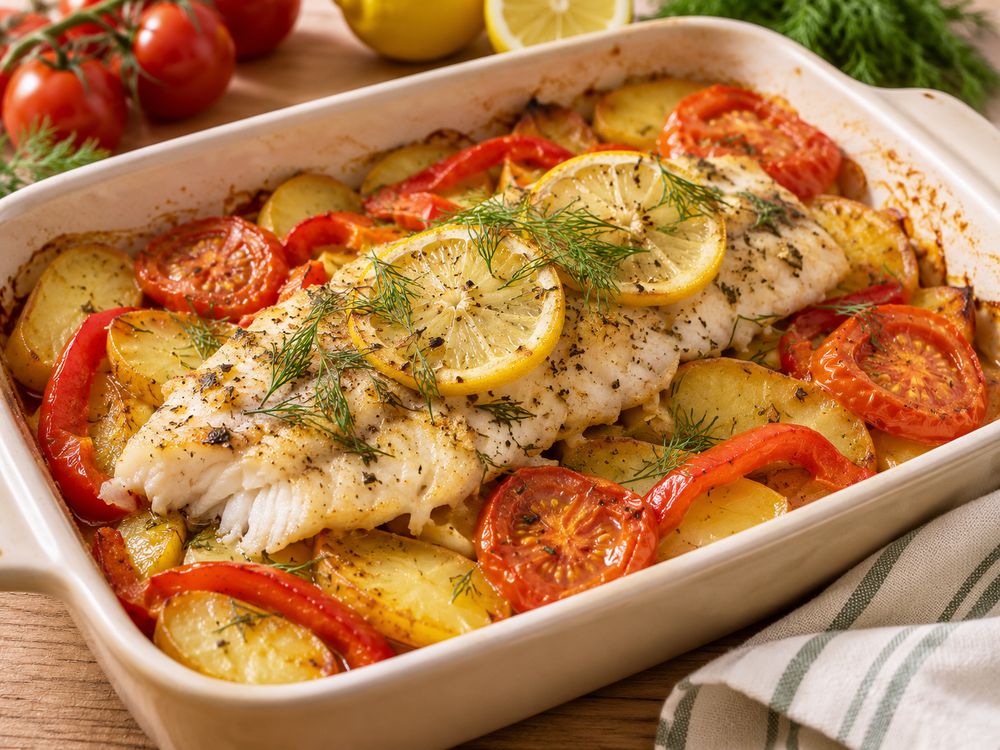
Baked zander with vegetables
Zander fillets baked on a bed of sliced potatoes, onion, pepper and tomato with olive oil, garlic, lemon and dill. The delicate white fish of the Danube, cooked in a single tray, light and fragrant.
Jump to ingredients ↓Allergens
fish, sulphites
We cannot guarantee the absence of traces (cross-contamination). Allergens don't include what you add when serving (e.g. sour cream, bread).
Ingredients
4 servings
Tap the circle to tick what you've prepared.
- 1,200 gZander (pike-perch) — 1–2 whole fish, filleted by the fishmonger (about 600 g fillet)
- 800 gPotatoes
- 1OnionAlternative: Red onion
- 2Bell pepper — one red, one yellow
- 3 tbspOlive oilAlternative: Sunflower oil
- 1 tspPaprika
- to tasteSalt
- to tasteBlack pepper
- 3TomatoesAlternative: Cherry tomatoes
- 80 mlWhite wineAlternative: Vegetable stock
- 3 clovesGarlic
- 1LemonAlternative: Vinegar, Lime
- 1 bunchDillAlternative: Parsley
Method
Heat the oven to 200 °C. Peel the potatoes and slice them 3–4 mm thick; cut the onion into rings and the peppers into strips.
⏱ 10 min
Toss the vegetables in the tray with 2 tablespoons of the oil, the paprika, salt and pepper and spread them out evenly. Bake for 25 minutes, until the potatoes start to soften.
⏱ 25 min
Meanwhile, cut the fillets into portions, salt them and squeeze over the juice of half the lemon. Slice the tomatoes and chop the garlic and dill.
Take out the tray, lay the tomatoes over the potatoes, then the fish skin-side down. Scatter over the garlic and half the dill, drizzle with the rest of the oil and pour the wine around the edges.
Bake for another 18–20 minutes, until the fish turns opaque and flakes easily.
⏱ 20 min
Scatter over the remaining dill and serve with wedges from the other lemon half.
Serving: Serve straight from the tray with lemon wedges and a cabbage or cucumber salad.
Storage: Keeps 2 days in the fridge; reheat covered in the oven so the fish does not dry out. Does not freeze well.
Nutrition (per serving)
Fibre: 6.8 g · Sugars: 6.8 g · Salt: 0.3 g
Nutrition values estimated from verified data.
Sources: CIQUAL 2025 table (ANSES, version of 3 Nov 2025).