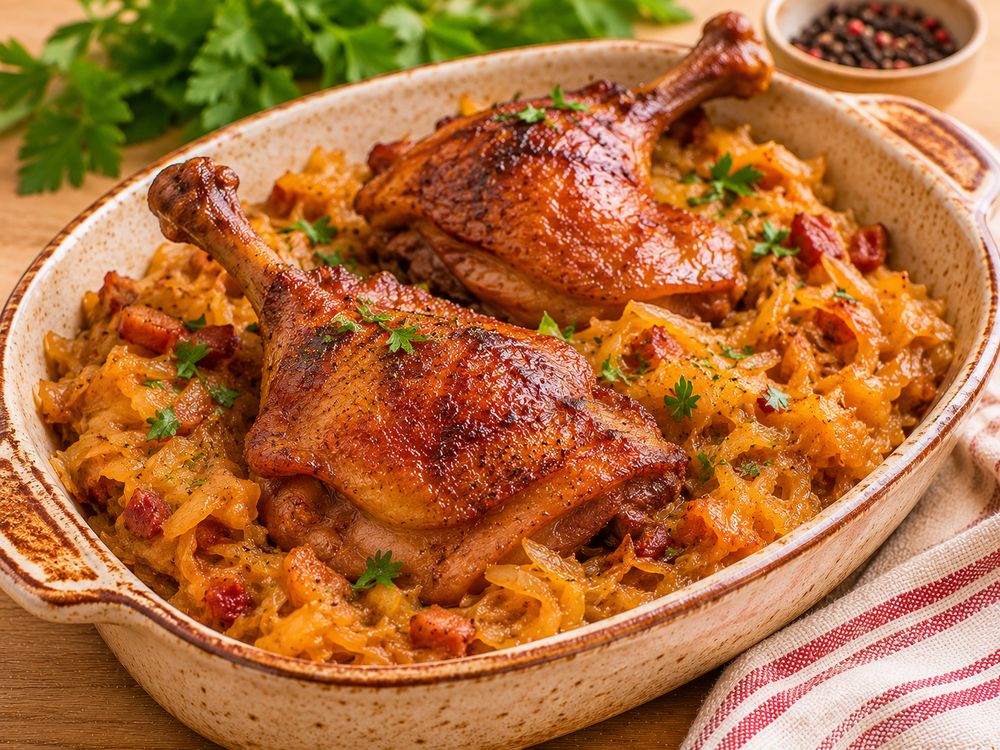
Duck with sauerkraut
Browned duck pieces baked slowly on a bed of sauerkraut braised with onion, tomatoes, bay and black peppercorns. The meat turns tender while the cabbage caramelises in the duck fat.
Jump to ingredients ↓Allergens
No major allergens in the ingredients.
We cannot guarantee the absence of traces (cross-contamination). Allergens don't include what you add when serving (e.g. sour cream, bread).
Ingredients
6 servings
Tap the circle to tick what you've prepared.
- 1,800 gDuck — one whole duck, jointed into 8 pieces
- 1½ kgSauerkraut
- 2OnionAlternative: Red onion
- 1 canCanned tomatoesAlternative: Tomatoes
- 3Bay leaves
- 1 tspBlack pepper — whole peppercorns
- 1 tspPaprika
- 1 tspThyme
- 200 mlWater
- to tasteSalt
Method
Joint the duck into 8 pieces, trim off excess fat and loose skin and season lightly with salt.
Brown the pieces skin side down in a large dry pan for 10 minutes to render the fat. Lift them out and keep just 2 tablespoons of the fat.
⏱ 10 min
If the sauerkraut is very sour, rinse and squeeze it, then chop it finely.
In the reserved fat, soften the chopped onion for 5 minutes. Add the sauerkraut and paprika and cook for 15 minutes, stirring.
⏱ 20 min
Stir in the tomatoes, bay leaves, peppercorns, thyme and water, then spread the cabbage in a deep roasting dish.
Lay the duck on top, skin side up. Bake at 180 °C for 90 minutes, until the meat is tender and the cabbage has browned at the edges.
⏱ 90 min
Let it rest for 5 minutes, then serve the duck on the cabbage.
Serving: Serve with polenta or crusty bread and a glass of dry red wine.
Storage: Keeps 4 days in the fridge and is even better the next day; freezes for 2 months.
Nutrition (per serving)
Fibre: 9.4 g · Sugars: 7.8 g · Salt: 4.5 g
Nutrition values estimated from verified data.
Sources: CIQUAL 2025 table (ANSES, version of 3 Nov 2025); USDA FoodData Central (SR Legacy, 2018).